An all-electric research aircraft concept for stratospheric flight and beyond.
Noēsis represents Wicked North Technology’s commitment to advanced aerospace research—developing a practical pathway toward stratospheric electric aircraft through rigorous engineering methodology and custom hardware development.
Status
Active Research
Focus
Stratospheric Flight
Propulsion
All-Electric
Approach
Research-Driven
Project Noēsis is an all-electric research aircraft concept designed to explore the feasibility of stratospheric flight and long-duration operations at high altitude. The project represents a systematic approach to understanding the engineering challenges of electric aircraft propulsion, energy storage, and high-altitude aerodynamics.
The Engineering Challenge
Stratospheric flight presents unique engineering challenges. At altitudes above 60,000 feet, the atmosphere becomes extremely thin, requiring aircraft to operate at lower speeds while maintaining lift through larger wingspans and optimized airfoil designs.
All-electric propulsion adds additional constraints: battery energy density, thermal management at altitude, motor efficiency across varying atmospheric conditions, and the weight penalty of carrying all energy onboard.
Noēsis approaches these challenges not as marketing claims, but as genuine engineering problems requiring methodical research and iterative development.
Energy Density Constraints
Current battery technology limits range and endurance. Noēsis models these constraints realistically.
High-Altitude Aerodynamics
Thin atmosphere requires optimized wing loading and propulsion efficiency.
Thermal Management
Extreme cold at altitude affects battery performance and electronics operation.
System Integration
Every gram matters. Integration must be optimized for weight and reliability.
Aircraft Sizing Methodology
The Noēsis sizing methodology begins with first-principles analysis of the mission requirements. Rather than starting with an arbitrary configuration, the aircraft parameters emerge from the physics of the problem.
This includes wing area calculations based on required lift at cruise altitude, propulsion sizing based on drag analysis, and energy requirements derived from mission profile and battery specific energy.
The methodology is documented, repeatable, and designed for iteration. As battery technology improves, the sizing automatically adapts to show what becomes possible.
Methodology documented in engineering repository
01
Mission profile definition
02
Atmospheric modeling
03
Wing sizing calculations
04
Propulsion system requirements
05
Energy storage analysis
06
Weight budget development
07
Configuration iteration
08
Performance validation
Custom Electrical Architecture
The electrical architecture of Noēsis goes beyond simply connecting batteries to motors. It encompasses power distribution, battery management, thermal monitoring, and redundant safety systems.
Each subsystem is designed for reliability at altitude, where maintenance access is impossible and system failure has serious consequences.
Battery Management
Thermal Control
Power Distribution
Telemetry
Custom PCB & Hardware
Project Noēsis requires custom electronic hardware designed specifically for the mission profile. Off-the-shelf components don’t meet the combined requirements of weight, reliability, and altitude performance.
Wicked North Technology is developing custom PCBs for power management, motor control, telemetry, and flight data acquisition. Each board is designed in-house with schematics and layouts documented for manufacturing.
This is genuine hardware development—not just CAD visualization of electronics, but functional circuit design with real components and validated performance.
Power Management Unit
Custom BMS with cell balancing, temperature monitoring, and fault protection.
Motor Controller
Efficient ESC design optimized for high-altitude motor operation.
Telemetry System
Real-time data acquisition for flight testing and performance validation.
CAD Development
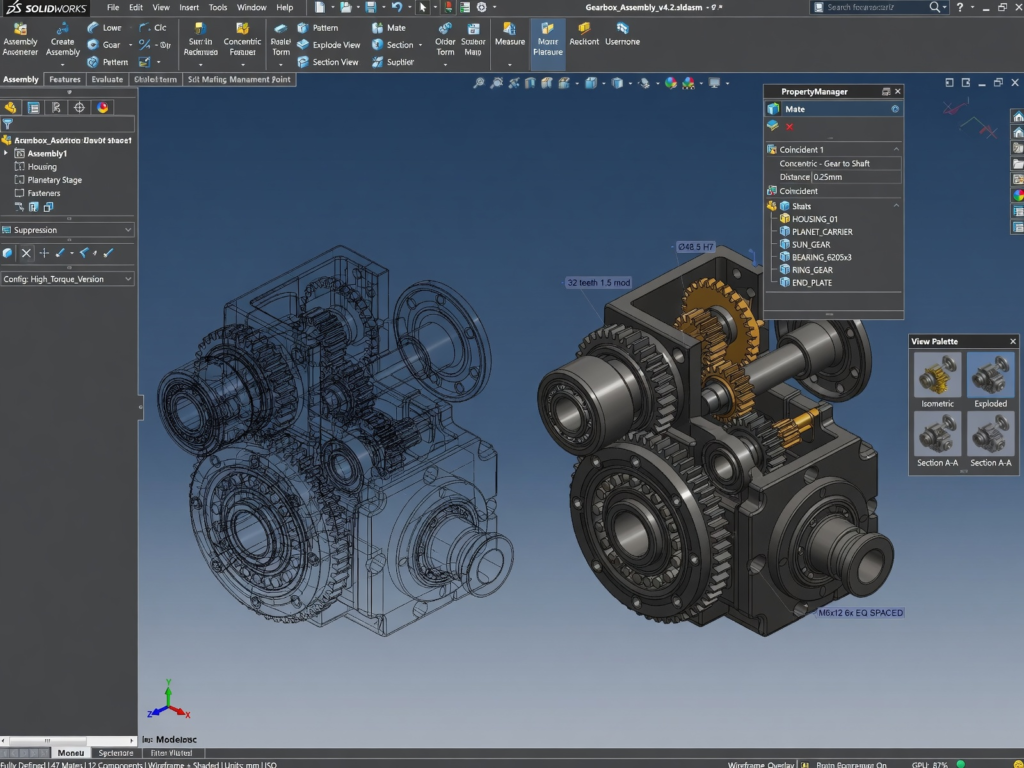
The Noēsis airframe is being developed through detailed CAD modeling. Every component is designed with attention to structural integrity, weight optimization, and manufacturing feasibility.
The CAD development includes fuselage design, wing geometry optimization, motor mounting integration, and internal systems packaging. Each iteration is evaluated against the sizing methodology to ensure the design meets performance requirements.
All CAD work is documented with version control and engineering change tracking for traceability.
Version-controlled engineering repository
Propulsion Research
Electric propulsion for stratospheric flight requires careful motor and propeller selection. At high altitude, propellers must be larger and spin slower to remain efficient in thin air.
Noēsis is investigating motor configurations that balance efficiency, weight, and reliability. This includes direct-drive options, gearbox considerations, and propeller optimization for the specific flight envelope.
The propulsion research is ongoing, with each finding documented and feeding back into the aircraft sizing model.
Engineering Repository
All Project Noēsis development is documented in a structured engineering repository. This includes sizing calculations, CAD files, hardware schematics, test results, and design decisions. The repository ensures traceability and enables systematic progress.
Version Control
Every change tracked and documented
Engineering Documentation
Calculations, specs, and decisions recorded
Test Results
Validated findings inform design iteration
Current Development
Sizing Model
Initial sizing methodology established and validated against published research. Model being refined with updated battery technology specifications.
CAD Development
Preliminary airframe design in progress. Wing geometry optimization underway based on sizing results.
Hardware Design
Power management unit PCB design in schematic phase. Component selection optimized for weight and reliability.
Future Direction
Project Noēsis is a long-term research initiative. As battery technology improves and our engineering understanding deepens, the project will evolve toward increasingly capable configurations. The goal is practical stratospheric flight—not promises, but demonstrated engineering achievement.